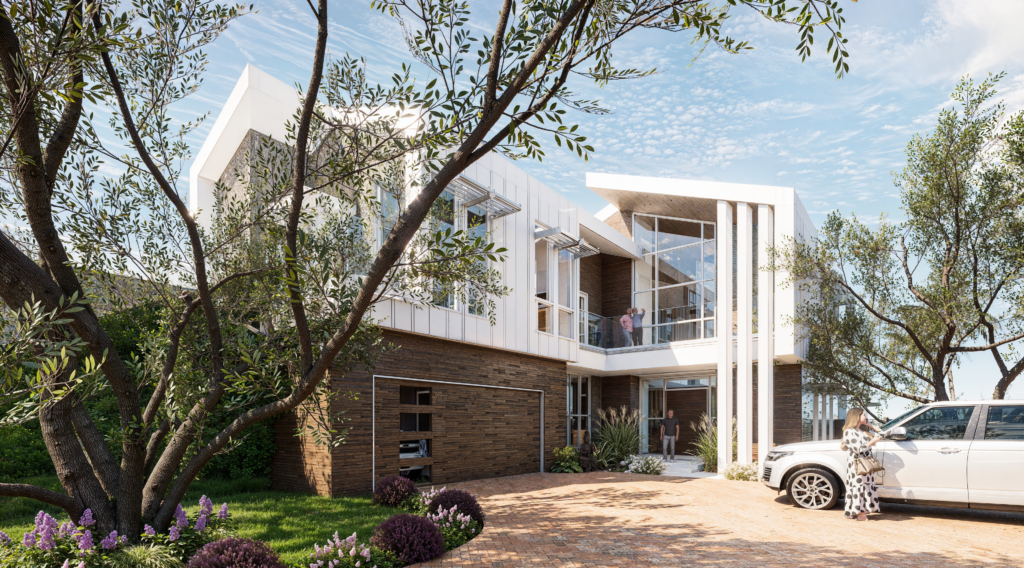
On a 20,842-square-foot corner lot with unobstructed views to the Intracoastal, the design begins with restraint. Four mature live oak trees are preserved and used to choreograph approach, shade, and views. The primary entry addresses the west frontage; a secondary drive on the south manages daily circulation and service. With setbacks and coastal winds in mind, the house is sited to stretch toward the water while leaving room for outdoor rooms: cabanas, decks, pool terrace, gardens, and a private dock, so that life naturally spills outside.
Inside, the 11,471-square-foot home privileges movement and connection. A direct link from garage to pantry/kitchen handles the practicalities of coastal living (think boats, gear, groceries) without disrupting the public rooms. The formal and main living/dining spaces align on an axis from west entry to the waterfront east, culminating in a broad, glassy rear façade. Vaulted ceilings and double-height atriums expand volume and sightlines; bedrooms cluster on the east to seize the sunrise and water views, while an in-law suite overlooks the oaks and enjoys its own private stair and entry.
The envelope is tuned to Florida’s sun and breezes. Three-panel sliding doors erase the threshold at the main living areas, inviting cross-ventilation from the water. A storefront window system at the vaulted living room washes the interior with daylight; deep roof overhangs and horizontal metal brise-soleil modulate glare and heat. Operable windows, especially awning units above the stairs and in the formal living room, let cooler northern light in and give stack-effect ventilation a boost.
A three-tier pitched roof articulates program: the lowest crowns the garage, the middle frames the in-law suite, and the highest marks the primary living volumes. This stepping yields a composed yet dynamic silhouette from the street. Facades mix painted stucco with metal wall panels and wood-look tile for warmth, tactility, and a durable coastal palette. Window placement follows the logic of the metal panel datum, so that inside views and outside order align.
A north-side second-floor setback unlocks a service promenade: a slim, hidden zone for A/C units and maintenance access, out of view yet fully functional. Double-height atriums at the family and formal living rooms enhance connectivity, bounce light deeper into the plan, and give the interiors an easy, gallery-like calm.
This house treats “luxury” as comfort, climate logic, and thoughtful choreography. It preserves old trees, celebrates water with restraint, and equips a family for multigenerational living. The result is architecture that feels inevitable on its site: airy, shaded, and seamlessly open to the coast.