
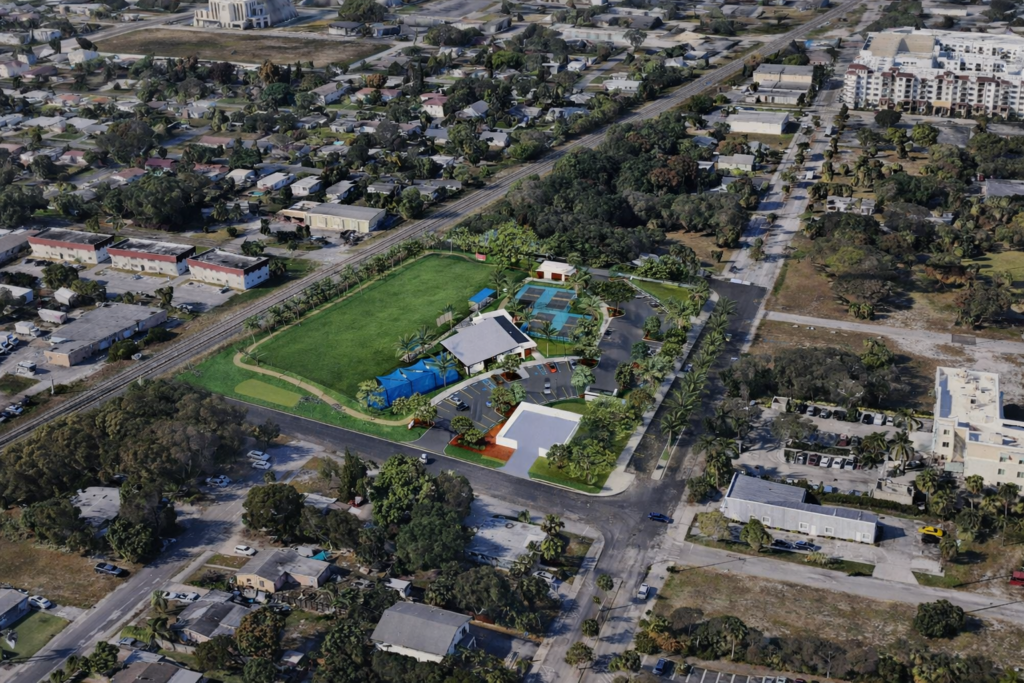
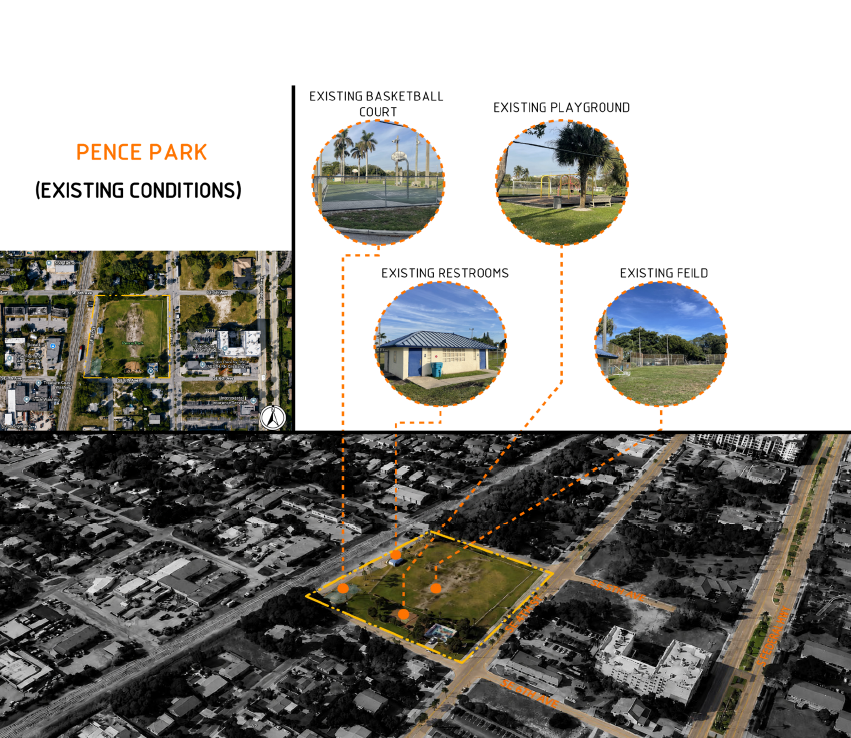
Located in Boynton Beach, Florida, the proposed redevelopment transforms an underutilized 3.33-acre neighborhood park into a vibrant, resilient, and community-focused recreational destination.
Designed to strengthen community interaction and expand recreational opportunities, Pence Park introduces a thoughtful balance of active recreation, shaded gathering spaces, and flexible civic amenities within a compact urban site. The project centers around a 2,126-square-foot community building that serves as the heart of the park’s operations and programming.
The redevelopment includes four pickleball courts, a shaded playground, a covered public plaza, open recreational fields, and a flexible multi-purpose room intended to support educational programs, community events, and neighborhood activities. Together, these elements create a welcoming and adaptable public space designed to serve residents of all ages.
The project’s design approach was heavily influenced by South Florida’s climate and the surrounding residential context. Site orientation strategies help minimize sun glare on athletic courts, while extensive shade structures, covered gathering areas, and landscape elements improve comfort and usability throughout the year.
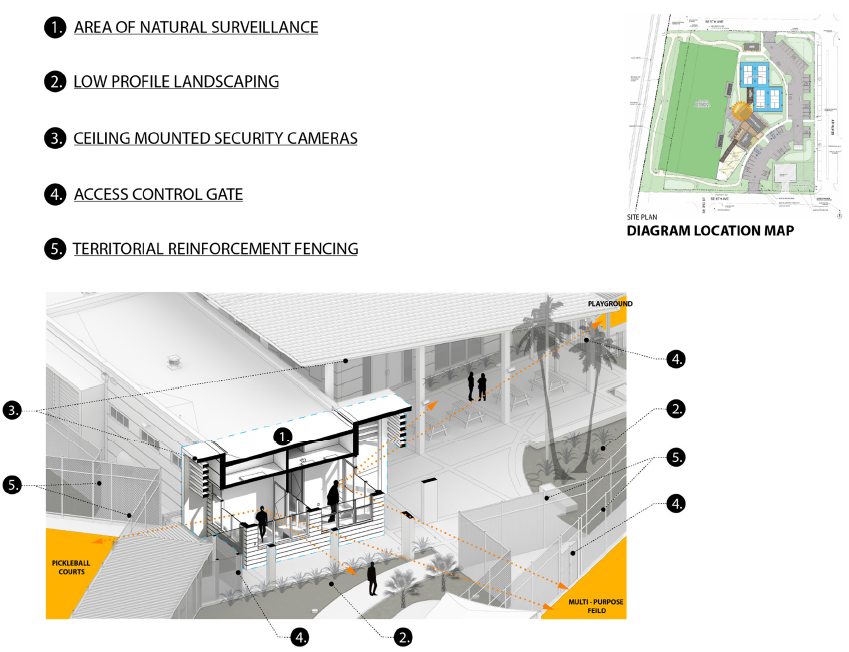
A major focus of the design was creating a safe and highly visible public environment through Crime Prevention Through Environmental Design (CPTED) principles. Clear sightlines, centrally located activity zones, access control points, low-profile landscaping, and integrated surveillance strategies work together to promote safety, visibility, and community confidence throughout the park.
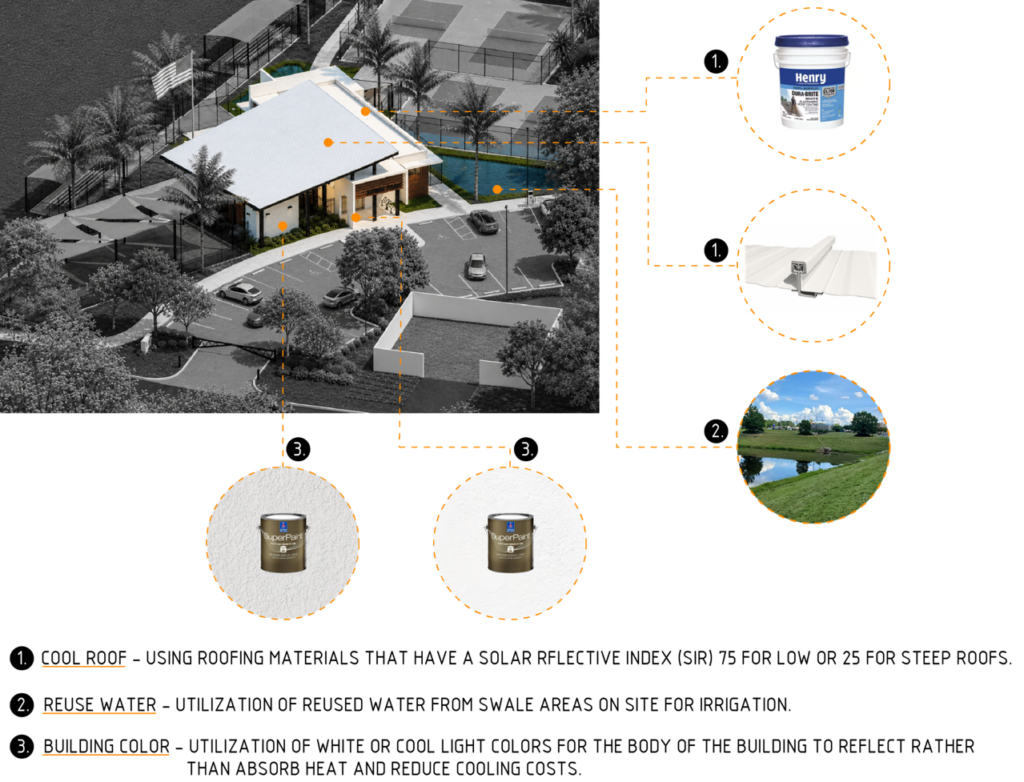
Sustainability and long-term resiliency also played a significant role in the project’s development. The design incorporates cool roofing systems, light-colored building materials, reclaimed water strategies, reduced impervious surfaces, and durable low-maintenance materials intended to support long-term operational efficiency and environmental performance.
Beyond recreation, Pence Park was envisioned as a civic destination that reflects the identity of the surrounding community. Integrated public artwork incorporated into building façades and site features enhances wayfinding, screens utilitarian elements, and contributes to the park’s overall sense of place.
A major design objective for Pence Park was creating strong physical and visual connections between each programmed space throughout the site. The park’s organization is centered around a primary pedestrian pathway that branches outward into the various recreational, social, and community-oriented amenities. The centrally located restrooms, covered plaza, and community building help create a clear and intuitive user experience while supporting visibility and accessibility across the park.
The multi-purpose room was envisioned as a flexible gathering space capable of supporting educational programming, recreational activities, community meetings, and neighborhood events. Large openings, natural light, and visual connections to outdoor spaces reinforce the building’s role as a welcoming civic anchor within the park.
The covered plaza further strengthens this sense of community by creating a shaded outdoor environment designed for casual interaction, outdoor dining, and everyday social activity. Together, these spaces create a layered experience that encourages both active recreation and informal gathering throughout the day.
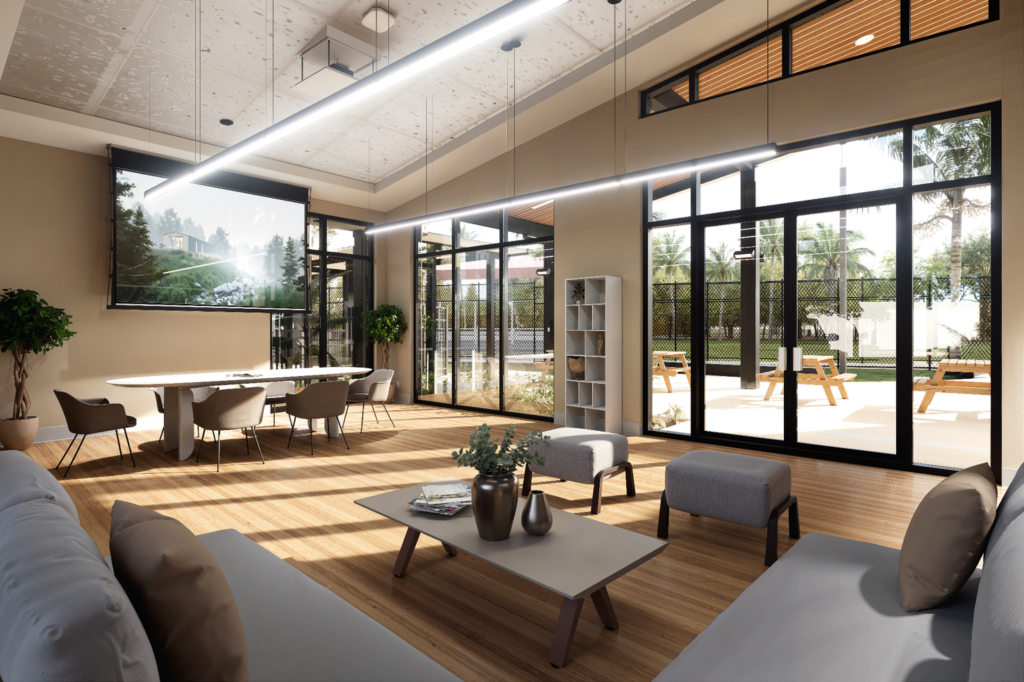
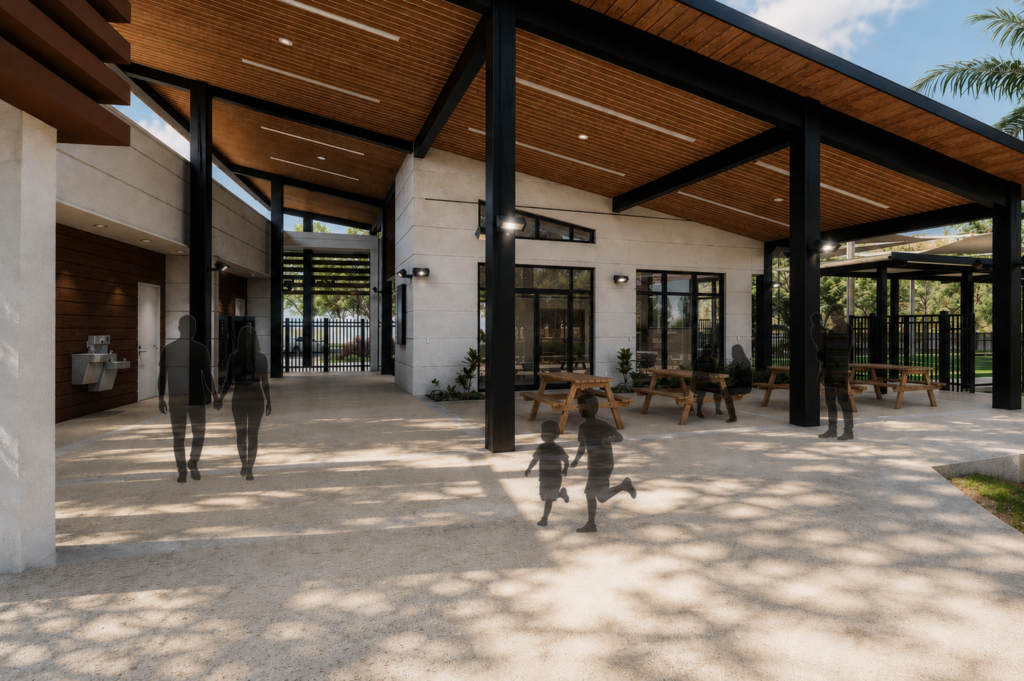
The architectural language of Pence Park emphasizes simplicity, durability, and climate responsiveness. The design evolved from a simple geometric massing strategy into a refined architectural form shaped by shade, openness, and circulation. Durable, low-maintenance materials and extensive covered areas were incorporated to respond to South Florida’s intense climate conditions while creating comfortable public gathering spaces year-round.
Sustainability principles were integrated throughout the project, including cool roofing systems, reclaimed water utilization, reduced impervious surfaces, light-colored building materials, and efficient building systems intended to improve long-term environmental performance and operational efficiency.
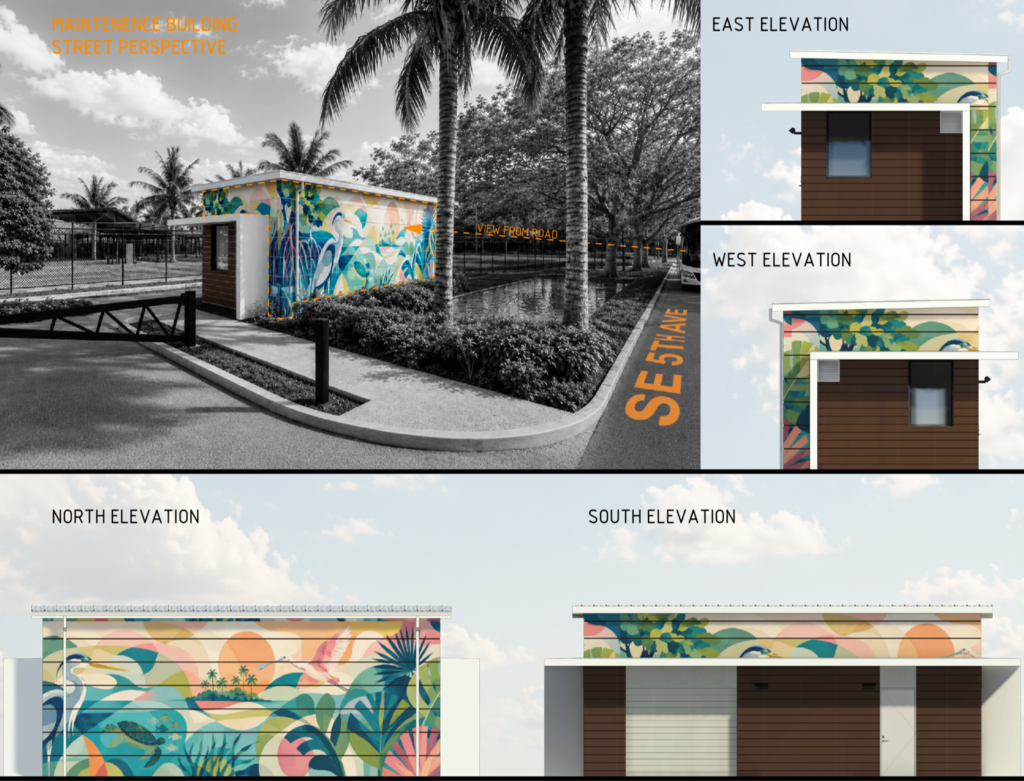
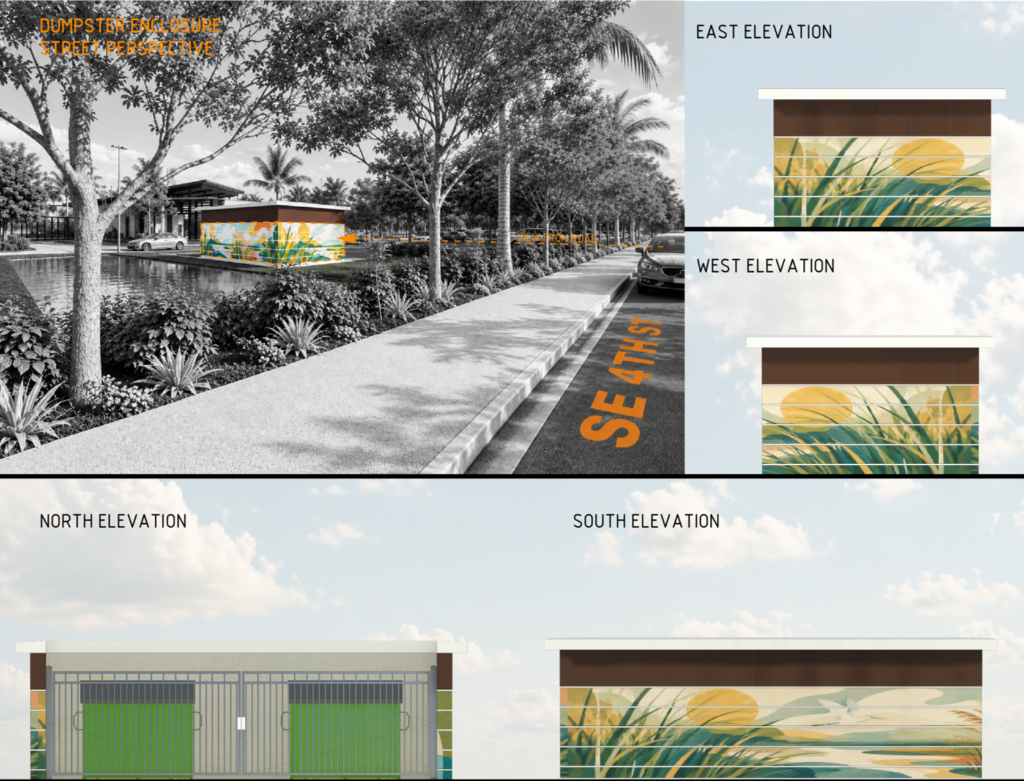
Public art also plays an important role in shaping the identity of the park. Integrated artwork on building facades and dumpster enclosures transforms utilitarian elements into visually engaging landmarks that contribute to wayfinding, community expression, and an enhanced sense of place throughout the site.
Ultimately, the Pence Park redevelopment reimagines the traditional neighborhood park as a resilient and inclusive civic destination that supports recreation, wellness, safety, and community interaction. Through thoughtful site planning, climate-responsive design strategies, flexible public spaces, and integrated architectural features, the project creates an environment designed to serve residents of all ages while strengthening the surrounding neighborhood’s identity and long-term growth. By balancing functionality, sustainability, and placemaking, Pence Park demonstrates how intentional public design can elevate everyday community experiences and create lasting value for the City of Boynton Beach.